Earthrise: The Christmas Eve Photograph That Changed the Argument
The Space Race · December 24, 1968
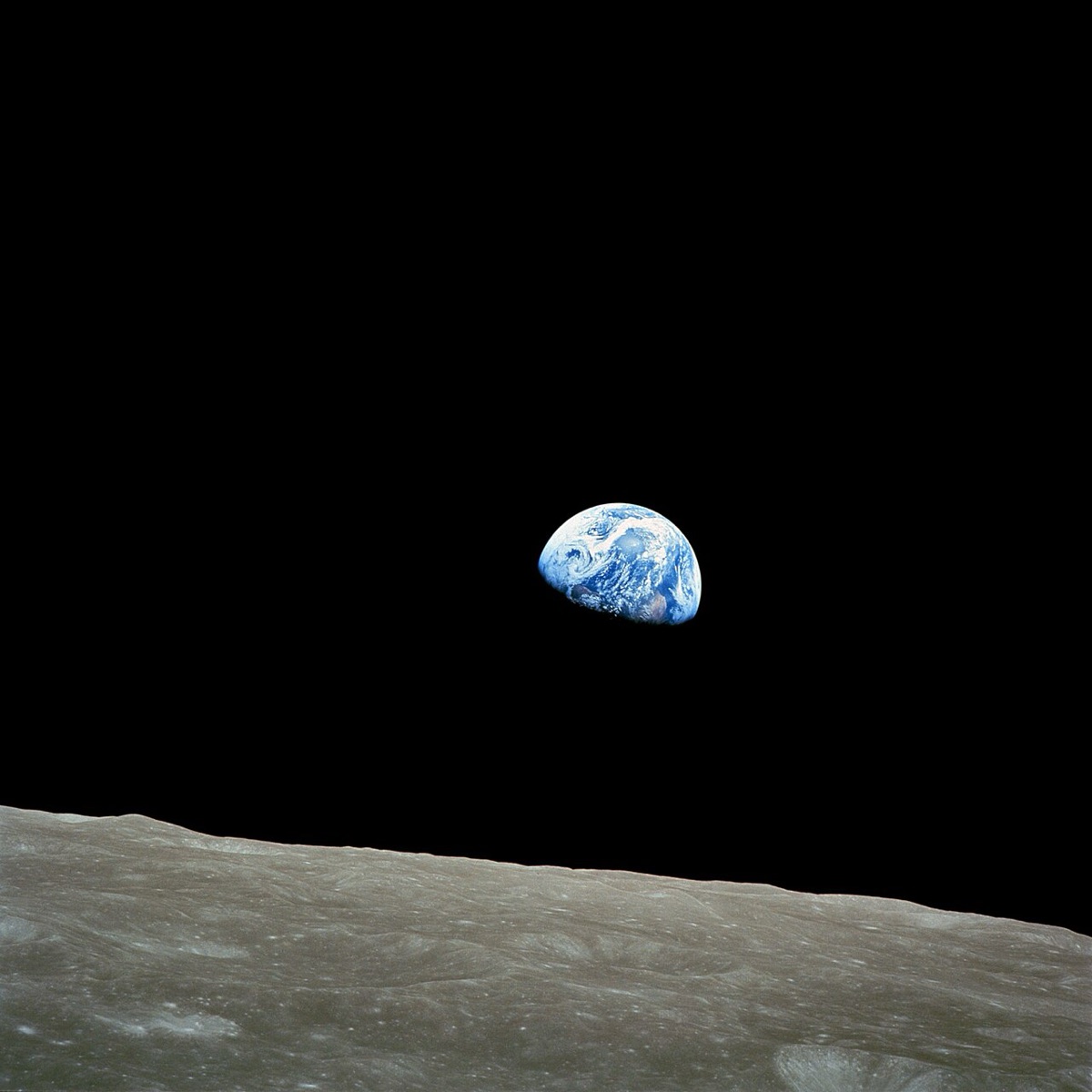
Earthrise, photographed from lunar orbit by the crew of Apollo 8 on December 24, 1968 · NASA photograph, public domain (PD-USGov-NASA), via Wikimedia Commons
Apollo 8 was not supposed to be the famous one. It was a test — the first crewed flight of the Saturn V beyond Earth orbit, sent to the moon and back without a lander, in a year that had already delivered two assassinations and a convulsive election.
On the fourth orbit the spacecraft rolled, and the crew saw the Earth come up over the lunar horizon. There was a scramble for color film, and the photograph credited to Bill Anders is the one that got printed everywhere: a blue-and-white planet, small, unlabeled, with no borders visible from that distance.
That evening the three of them read from Genesis to the largest television audience yet assembled, and came home. The environmental movement adopted the picture almost immediately, which is a strange fate for a photograph taken by a military test pilot on an engineering shakedown flight — and a fair measure of what the space program did to the way people saw the ground under their feet.
On the record
- Apollo 8 launched December 21, 1968 and made ten lunar orbits on December 24-25.
- The Earthrise frame (AS08-14-2383) is credited to lunar module pilot William Anders.
- The Genesis reading on Christmas Eve drew what was then the largest TV audience in history.
- No crew had left Earth orbit before this flight.
🎵 Explore original 1950s-style doo-wop and slow-dance ballads, with new albums every week on the lovesong1950s channel.
Music on this channel is composed and produced with AI tools; the songs, stories, and artwork are original works created for lovesong1950s.
Sources: NASA — Apollo 8 mission overview · Image file at Wikimedia Commons.
More to read: the lovesong1950s home page · every post from October 2026


Comments
Post a Comment