October 14, 1950: Sturdy Gertie Replaces the Bridge That Danced Itself to Death
Today in 1950 · Saturday, October 14, 1950
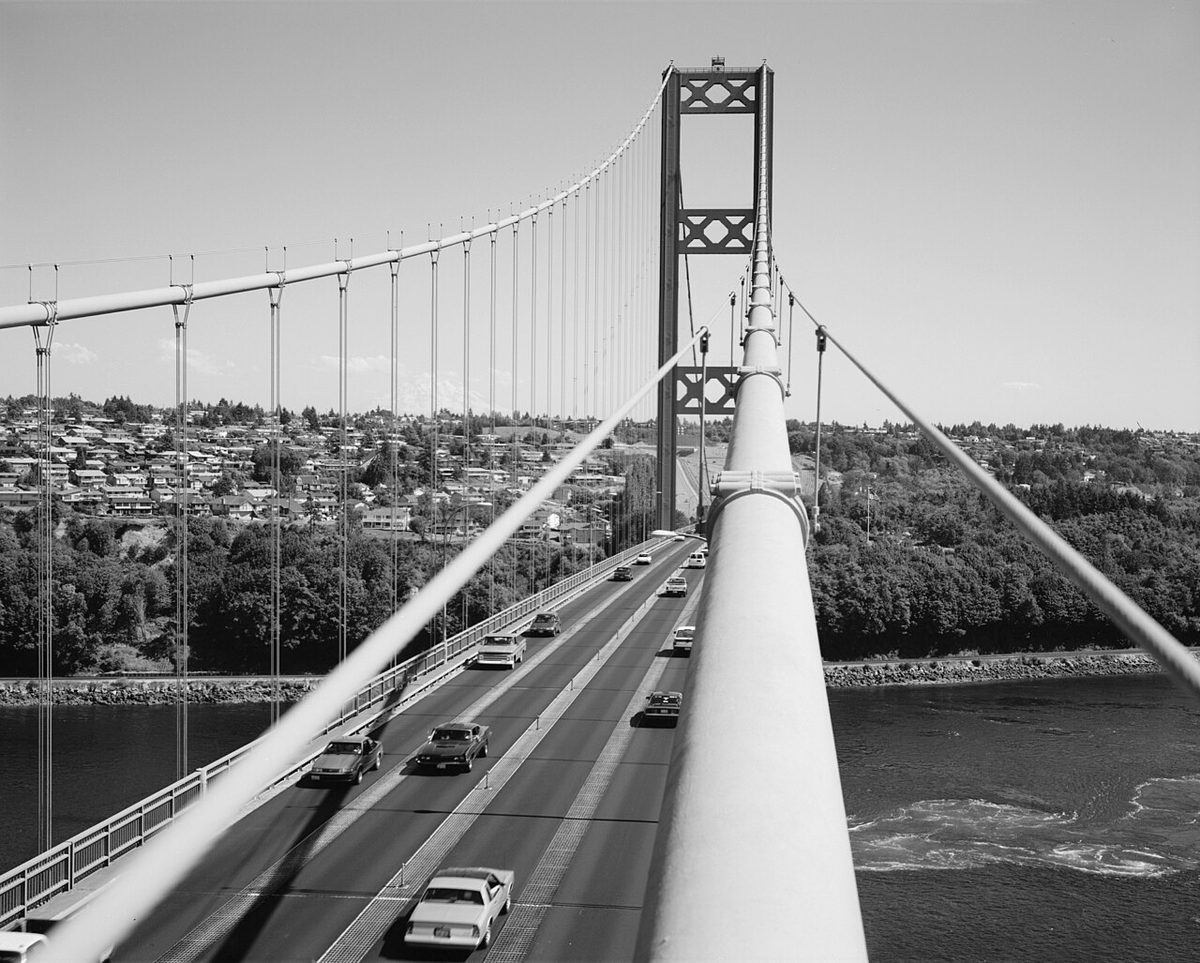
The 1950 Tacoma Narrows Bridge — 'Sturdy Gertie' — in a Historic American Engineering Record photograph · Historic American Engineering Record, NPS, public domain, via Wikimedia Commons
On this day in 1950, ten years after the most famous bridge failure ever filmed, traffic rolled across the Tacoma Narrows again. The original span — 'Galloping Gertie' — had twisted itself to pieces in a forty-mile wind in November 1940, its death captured on newsreel film that engineering students still watch. Its replacement opened today with a gala celebration and a nickname of its own: 'Sturdy Gertie.'
The new bridge was everything its predecessor wasn't. Where Gertie's shallow, solid plate girders had caught the wind like a sail, the new span breathed through a 33-foot-deep open Warren truss. Four traffic lanes replaced two; cable capacity rose from 28 to 36 million pounds; the anchor blocks weighed 54,000 tons. The price of the lesson: $13.7 million, a third over estimate — and worth every dollar, since at roughly a mile it ranked among the longest suspension bridges in the country.
Galloping Gertie's collapse had rewritten bridge engineering worldwide, forcing aerodynamics into a discipline that had thought mostly about gravity. Sturdy Gertie was the apology made concrete — and it holds to this day, joined by a twin span in 2007. The wreck of the first bridge still lies at the bottom of the Narrows, one of the largest artificial reefs on earth.
Also on this day
- Chinese forces of the 13th Army Group continued crossing the Yalu River into Korea under total secrecy.
- East Germany's Hermann Flade, an 18-year-old caught posting anti-election fliers, began the ordeal that made him a symbol of resistance.
🎵 On the radio that week: America’s No. 1 song was “Goodnight Irene” by Gordon Jenkins and The Weavers (Billboard best sellers) — the Weavers' version with Gordon Jenkins' orchestra sold about two million copies, with 'Tzena, Tzena, Tzena' on the same disc. That sound never really left — we recreate 1950s doo-wop and slow-dance ballads every week: read the stories behind our songs or listen on the lovesong1950s channel.
🎬 At the movies: “All About Eve” — fresh from its Roxy premiere, where extra telephone operators were hired just to handle ticket calls — was the picture everyone was talking about.
⚾ In sports: No. 1 Army flattened Michigan 27-6 and No. 3 Oklahoma survived Texas 14-13 in Dallas — the college football Saturday that kept the Cadets on top of the AP poll.
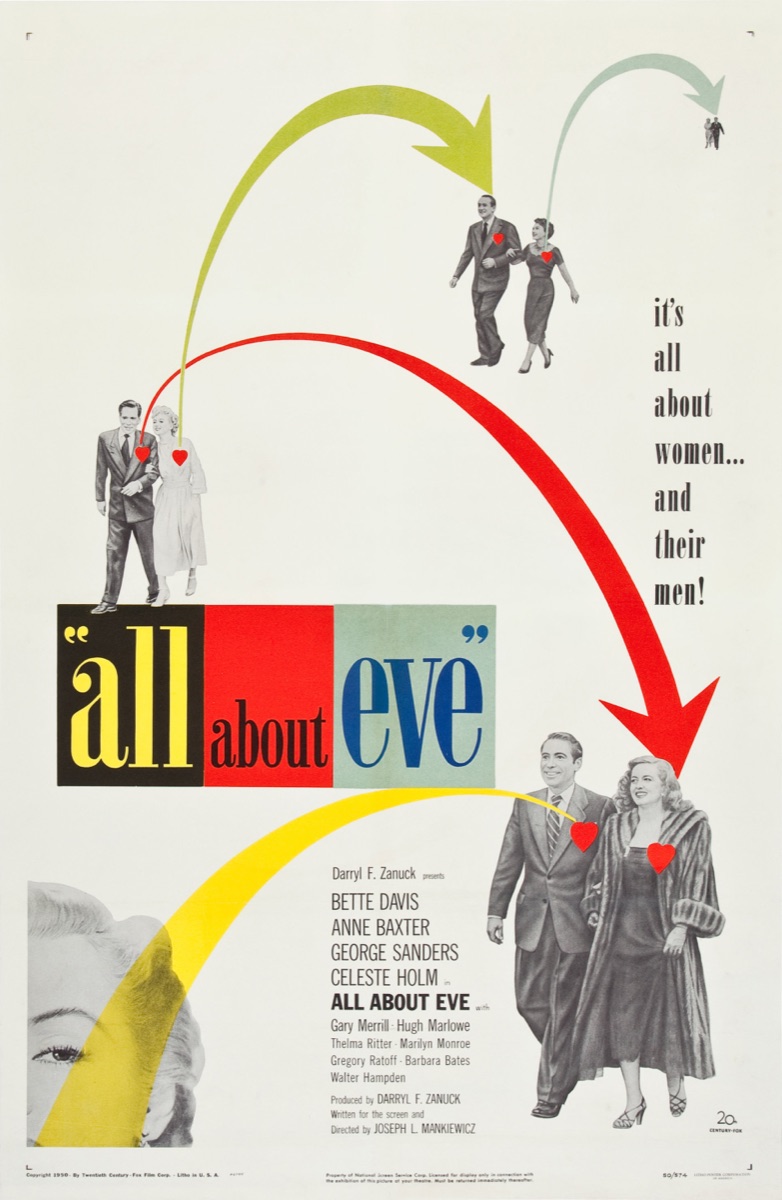
Theatrical poster for All About Eve (1950) · 20th Century-Fox poster, public domain (US copyright not renewed), via Wikimedia Commons
Sources: WSDOT: a tale of three bridges · HistoryLink: the 1950 bridge · Wikipedia: October 1950 · Billboard best-seller charts, 1950 (issue scans) · Variety National Boxoffice Survey, 1950 (Lantern scans) · Sports records: www.sports-reference.com. Every fact above is drawn from the records linked here — no dramatization, no invented details.
More from this series: Today in 1950 — the daily archive · every post from October 2026


Comments
Post a Comment