Duke of Earl (1962): The Man Billboard Called the Duke
The Story Behind the Song · Gene Chandler, 1962
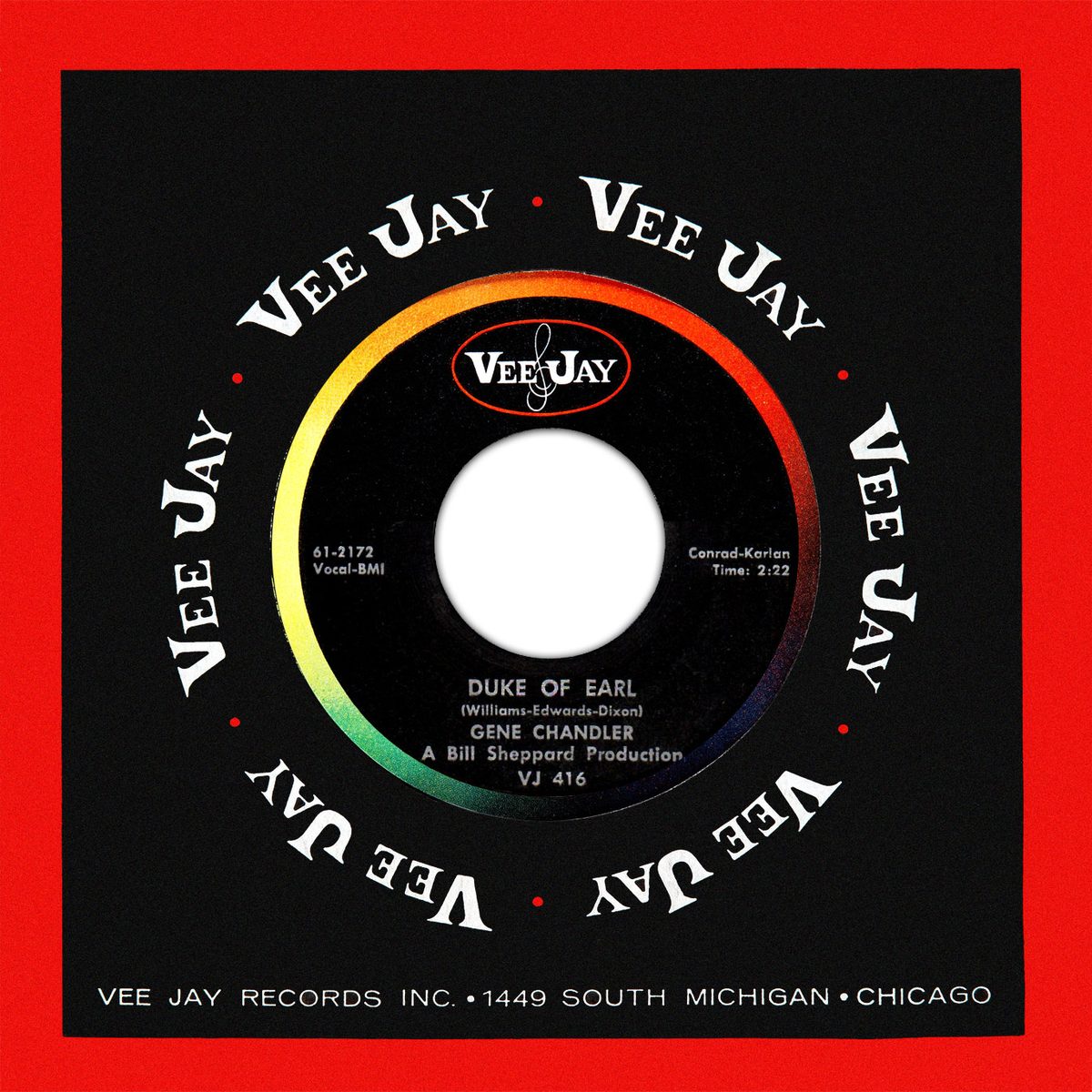
The Vee-Jay Records sleeve for "Duke of Earl," released November 1961 · Vee Jay Records, published without copyright notice, public domain
Eugene Dixon sang with a Chicago group called the Dukays. In November 1961 a record came out on Vee-Jay under a new name — Gene Chandler — and by the middle of February it was the best-selling record in the United States.
The Billboard Hot 100 in the issue dated February 17, 1962 has it at No. 1, up from No. 2, listed as Vee Jay 416 and credited to "Gene (Duke of Earl) Chandler." The magazine had absorbed the character into his name. Further down the same chart, at No. 75, sits "Nite Owl" by Gene Chandler and the Dukays — the singer competing with his own former group in the same week, on the same page.
The origin usually given for the song is that the chant grew out of a warm-up exercise, the group running through vowel sounds built on a bandmate's name. It is repeated everywhere and it may well be true; we could not find a source for it that we could open and read, so we pass it on as it was handed to us rather than as fact.
What is not in doubt is what the record did for its singer. He put on a cape, a monocle and a top hat, and for the rest of a long career he was the Duke of Earl — a stage character invented by a chart listing and a nonsense syllable.
On the record
- Released November 1, 1961 on Vee Jay 416.
- No. 1 on the Billboard Hot 100, issue dated February 17, 1962, rising from No. 2.
- Billboard credited the record to "Gene (Duke of Earl) Chandler."
- The same chart lists "Nite Owl" by Gene Chandler and the Dukays at No. 75.
- The warm-up-exercise origin story is widely repeated but we could not verify it.
🎵 We recreate this sound — 1950s doo-wop and slow-dance ballads, new albums every week on the lovesong1950s channel.
Music on this channel is composed and produced with AI tools; the songs, stories, and artwork are original works created for lovesong1950s.
Sources: Billboard Music Week, February 17, 1962 — Hot 100 (issue scan) · Wikimedia Commons file page for the Vee-Jay picture sleeve. Chart positions are cited to the specific Billboard chart and issue date, because the magazine ran several separate charts in these years and a record could sit at No. 1 on one and No. 8 on another.
More from this series: the lovesong1950s home page · every post from September 2026


Comments
Post a Comment