September 8, 1950: The Defense Production Act Becomes Law
Today in 1950 · Friday, September 8, 1950
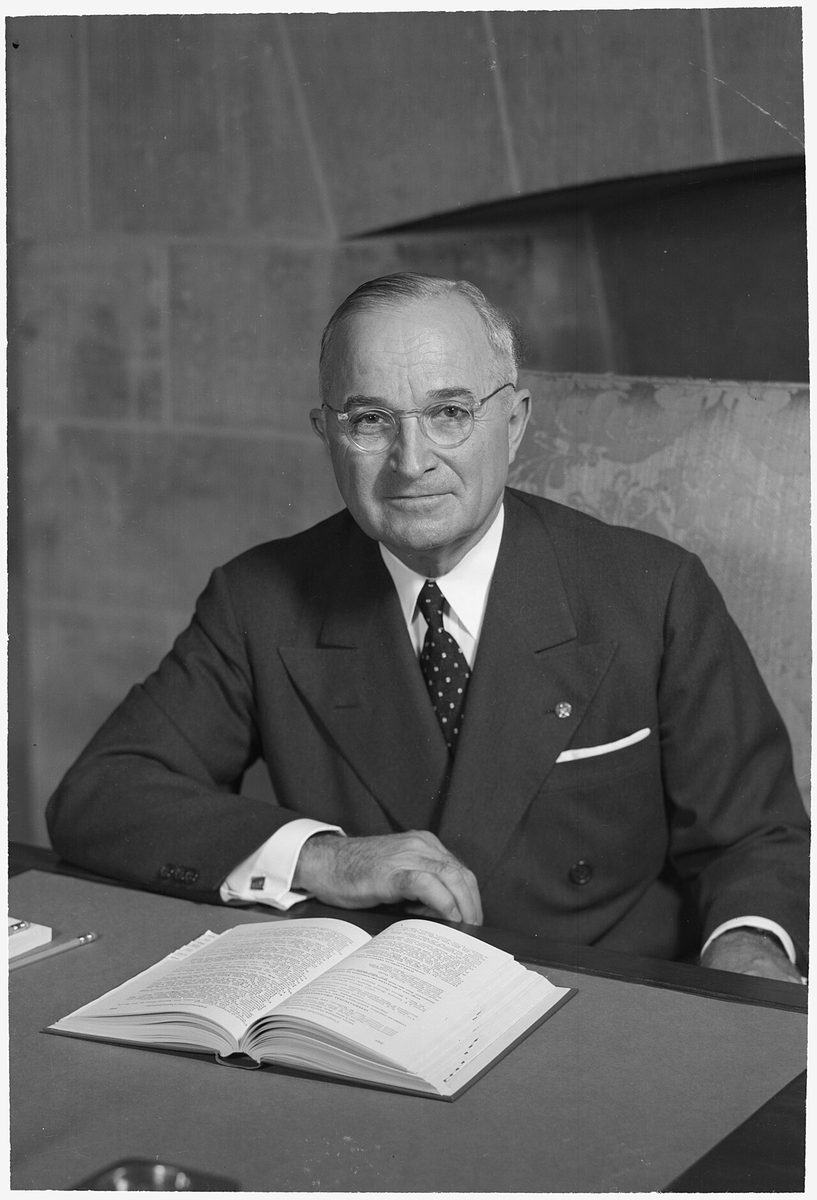
President Harry S. Truman, official portrait photograph · National Archives, public domain, via Wikimedia Commons
On this day in 1950, President Truman signed the Defense Production Act, handing the federal government sweeping authority over the American economy less than three months after the Korean War began. The law let Washington force military contracts to the front of any factory's order book, expand domestic manufacturing capacity through loans and subsidies, and prohibit the hoarding of scarce materials.
It was mobilization without a declared World War — a legal framework for running a hot war's industrial demands through a peacetime consumer economy. The following evening, Truman went on radio and television to explain the new powers to the nation, an address preserved in the Truman Library's sound archives.
The 1950 act never expired. Reauthorized again and again across seven decades, it remains on the books — invoked as recently as the COVID-19 pandemic to speed ventilators and vaccines. Few laws passed in the anxious autumn of 1950 still shape daily American life; this one does.
Also on this day
- Canada passed its Canadian Forces Act, expanding its military commitment to the Korean War.
- Featherweight champion Sandy Saddler defeated Willie Pep in their title rematch.
🎵 On the radio that week: America’s No. 1 song was “Goodnight Irene” by Gordon Jenkins and The Weavers (Billboard best sellers) — a folk song adapted by Lead Belly, who died broke in December 1949 — one year before it became the biggest hit of 1950. That sound never really left — we recreate 1950s doo-wop and slow-dance ballads every week: read the stories behind our songs or listen on the lovesong1950s channel.
🎬 At the movies: “Broken Arrow” was widening across the country — the first major Hollywood Western to portray Native Americans sympathetically, with Jeff Chandler's Oscar-nominated Cochise.
⚾ In sports: Phillies ace Curt Simmons, 17-8, made his final start of 1950 before his National Guard unit was called up for Korea — reliever Jim Konstanty, on his way to 74 appearances and the MVP award, finished the win.
Sources: Congressional Research Service R43767 · Truman's radio-TV address, Sep 9, 1950 · Truman Library sound recording SR62-81 · Wikipedia: September 1950 · Billboard best-seller charts, 1950 (issue scans) · Variety National Boxoffice Survey, 1950 (Lantern scans) · Retrosheet 1950 game logs and box scores. Every fact above is drawn from the records linked here — no dramatization, no invented details.
More from this series: Today in 1950 — the daily archive · every post from September 2026


Comments
Post a Comment