October 11, 1950: Color Television Gets Its First License
Today in 1950 · Wednesday, October 11, 1950
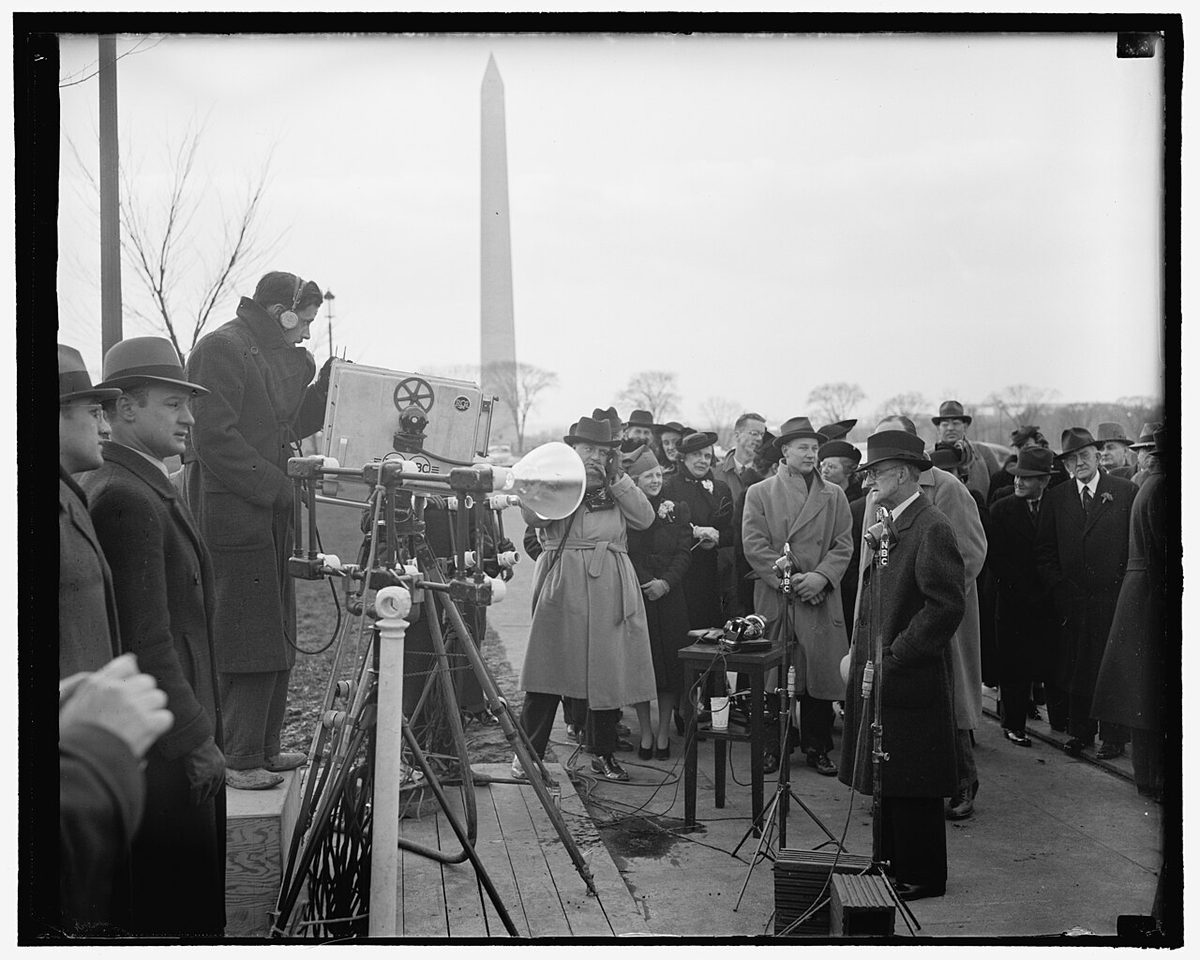
An FCC chairman faces a television camera on the National Mall during early TV demonstrations, 1939 — eleven years before the commission approved CBS color · Harris & Ewing Collection, Library of Congress, no known restrictions
On this day in 1950, the FCC made it official: CBS's field-sequential color system became the authorized standard for American color television — the first color TV authorization in US history, with commercial colorcasting cleared to begin November 20. The system, developed by Peter Goldmark, was half electronics, half clockwork: the image traveled electronically, but the color came from a tricolor disk spinning rapidly in front of the screen.
The catch was fatal, and everyone knew it: CBS color was incompatible with the more than 10.5 million black-and-white sets already in American homes, which could not display the broadcasts at all. RCA sued within a week to block the decision, lost all the way up — the Supreme Court affirmed the FCC in May 1951 — and CBS triumphantly began commercial color broadcasts in June 1951 to an audience of almost nobody. The first CBS color receiver cost $499.95; about a hundred were ever sold.
The war delivered the coup de grace: in October 1951 the Defense Production Administration asked CBS to halt color receiver production to conserve materials for Korea, and the system never restarted. By December 1953 the FCC reversed itself and adopted the compatible RCA-backed NTSC standard — the one that actually reached America's living rooms. Today's 'first' is a monument to a lesson technology keeps re-teaching: compatibility beats brilliance.
Also on this day
- North Korea rejected the UN's surrender demand as UN columns closed on Pyongyang.
- Gustav Heinemann resigned from Adenauer's cabinet over West German rearmament — a protest with a long political future ahead of it.
🎵 On the radio that week: America’s No. 1 song was “Goodnight Irene” by Gordon Jenkins and The Weavers (Billboard best sellers) — TIME magazine sniffed that the Weavers' polished version was 'dehydrated' and 'prettied up' — America bought it anyway. That sound never really left — we recreate 1950s doo-wop and slow-dance ballads every week: read the stories behind our songs or listen on the lovesong1950s channel.
🎬 At the movies: “Sunset Boulevard” was in its third month and still drawing crowds to watch Gloria Swanson's Norma Desmond prepare for her close-up.
⚾ In sports: The NHL raised its curtain with a Stanley Cup Final rematch, Detroit over the Rangers 3-2 — Gordie Howe returning from his head injury to begin the season that brought his first scoring title.
Sources: Eyes of a Generation: the color feud · Click Americana: color TV 1950s · US National Archives, Prologue: color TV (PDF) · Wikipedia: October 1950 · Billboard best-seller charts, 1950 (issue scans) · Variety National Boxoffice Survey, 1950 (Lantern scans) · Sports records: www.hockey-reference.com. Every fact above is drawn from the records linked here — no dramatization, no invented details.
More from this series: Today in 1950 — the daily archive · every post from October 2026


Comments
Post a Comment